

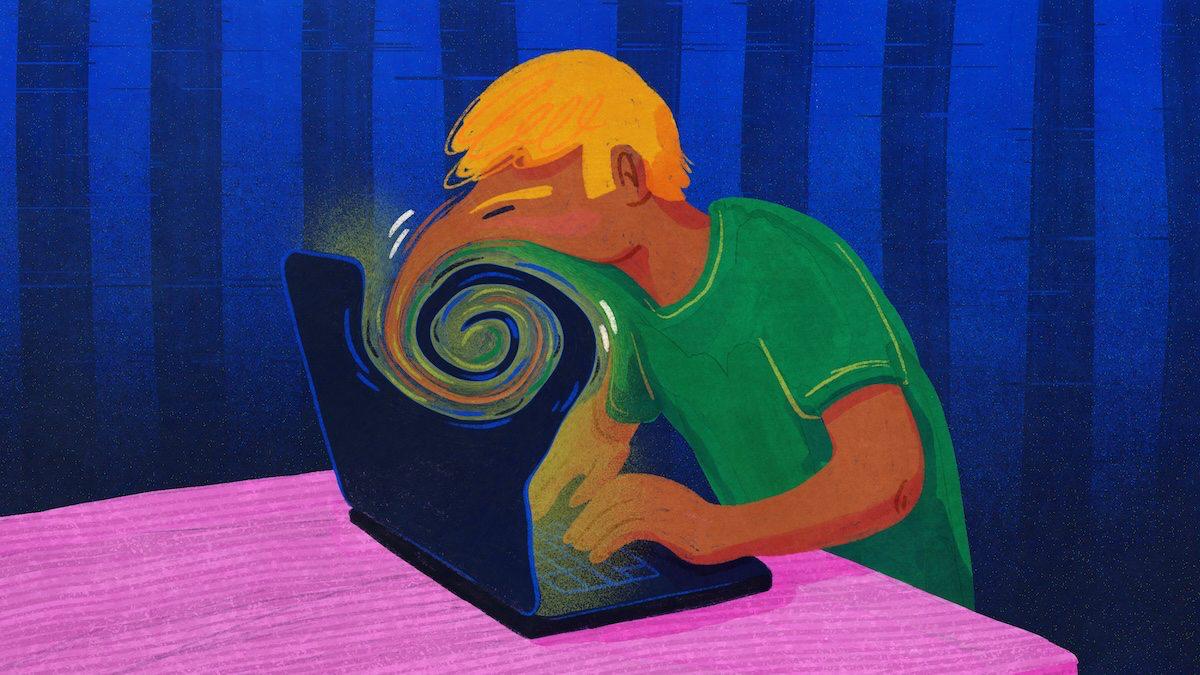
⚠️ Italy's national addiction service SerD (Servizio per le Dipendenze) has recorded an official case that many predicted but nobody wanted to be the first to admit - a behavioral addiction to an AI chatbot
Details of the first case:
A female patient of about 20 from Mestre (Venice) was admitted for treatment at SerD, part of the health authority ULSS 3 Serenissima. The diagnosis - "behavioral addiction" (dipendenza comportamentale): not to a substance, but to an algorithm. The mechanism worked through the bot's adaptiveness - it adjusted to every emotional state of the patient, creating a feeling of perfect understanding that no living person can offer. Real communication started losing out: predictable, imperfect, demanding effort. The result - the girl stopped communicating with people almost completely, and the algorithm became her only "conversation partner"
How the addiction loop forms:
📌 The perfect response - the bot always says exactly what the user wants to hear
📌 A safe space - no judgment, no conflicts, none of the unpredictability of real relationships
📌 Escalating adjustment - the longer the interaction, the more "precisely" the model hits expectations
📌 Crowding out real connections - next to the "perfect" conversation partner, real people seem more complicated and worse
A CHI 2026 study identifies three types of AI addiction to chatbots: escapist role-play, pseudo-social companions and "epistemic rabbit holes" - the Venice case falls into the second type. The most vulnerable are young people with weak social ties: AI creates a "convincing sense of safety" that quickly replaces real relationships for these users
The regulatory backdrop in Italy:
💡 Replika (2023) - the Italian regulator already banned the companion chatbot from processing data over emotional attachment risks
💡 EDPB (2025) - the European regulator fined the company after an investigation
💡 SerD is broadening its scope - until now the service dealt with gambling, compulsive shopping and smartphone addictions; AI addiction has become a fundamentally new category
⭐️ Laura Suardi, head of SerD ULSS 3 Serenissima:
"This is just the tip of the iceberg - we expect a sharp rise in the number of patients with AI addiction in the coming years"
💭 I was expecting this case - just didn't think it would come so fast. AI doesn't "hook your attention" the way social media does - it creates the illusion of a perfect conversation partner who always understands and never judges. A real person has no built-in defense against that. And that's exactly why this isn't the story of one girl from Venice